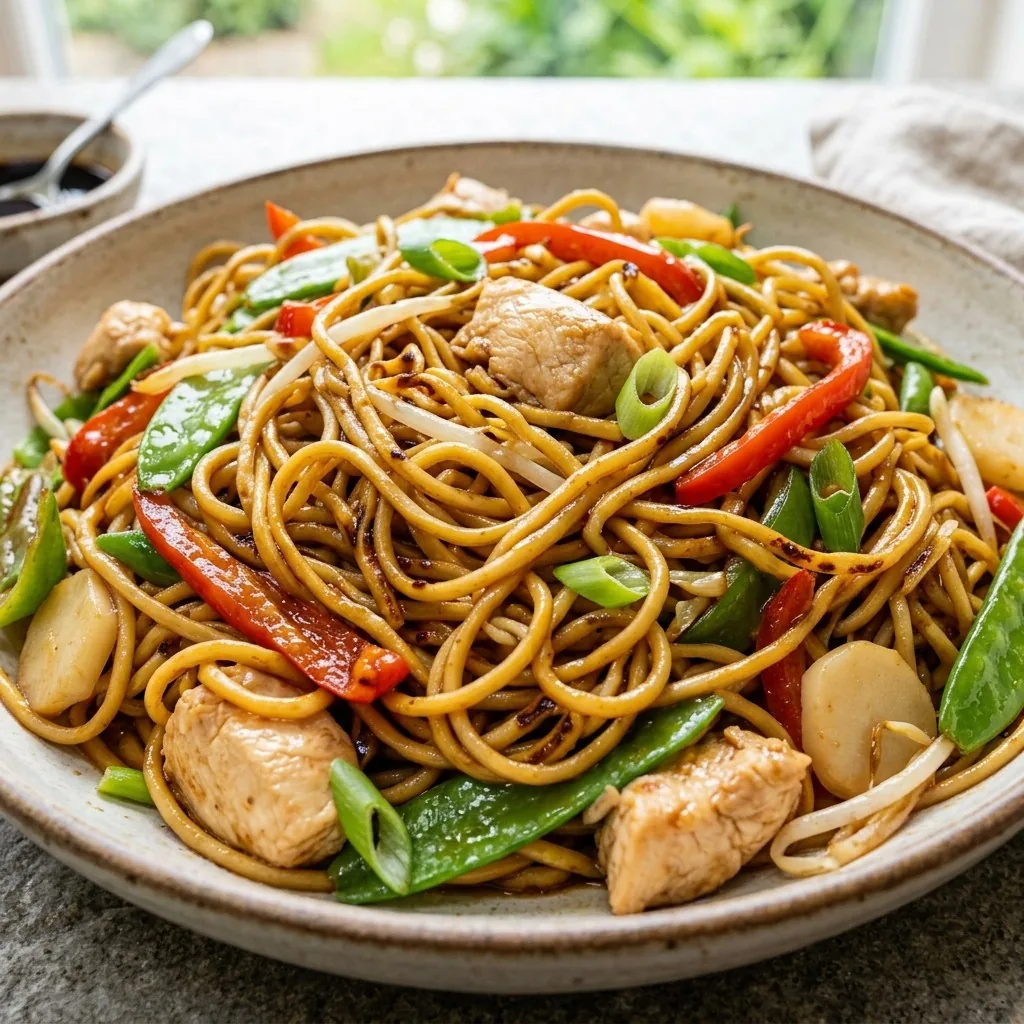
Chicken Chow Mein
A lighter take on the takeaway classic — tender chicken, a rainbow of crisp vegetables, springy egg noodles, and a deeply savoury soy and five-spice sauce, all wok-tossed and on the table in 35 minutes.
- 2 sprays low-calorie cooking spray (add more if needed)
- 1 large onion, sliced
- 1 teaspoon minced root ginger
- 1 teaspoon garlic, peeled and minced
- 1 large carrot, peeled and cut into slim batons
- 3 chicken breasts, skin and fat removed, cut into chunks
- 3 tablespoons dark soy sauce
- 2 tablespoons oyster sauce
- 2 tablespoons rice vinegar or juice of 1 lime
- 1 teaspoon granulated sweetener
- ½ teaspoon freshly ground black pepper
- ½ teaspoon Chinese five-spice
- 4 nests egg noodles (approx. 150g / 5oz total)
- 1 red pepper, deseeded and sliced
- 1 green pepper, deseeded and sliced
- 5.3 oz (150g) mangetout, halved
- 6 spring onions, trimmed and finely chopped
- 1 tin (200g) water chestnuts
- 1 tin (200g) beansprouts
- Spray a wok with low-calorie cooking spray and place over a high heat until it begins to smoke slightly. Add the sliced onion, minced ginger, minced garlic, and carrot batons. Stir-fry briskly, keeping the ingredients moving constantly, until they begin to soften and turn aromatic — about 2 to 3 minutes. High heat is essential here: a wok that is not hot enough will steam the vegetables rather than fry them, losing both the colour and the characteristic wok-charred flavour.
- Add the chicken breast chunks to the wok and continue cooking over high heat for approximately 5 minutes, stirring regularly, until the chicken begins to colour on the outside. The pieces should be searing in the pan, not stewing — if the wok starts steaming heavily, increase the heat or cook in two batches to avoid overcrowding.
- Add the dark soy sauce, oyster sauce, rice vinegar (or lime juice), sweetener, black pepper, and Chinese five-spice to the wok. Stir thoroughly to coat the chicken and vegetables in the sauce, then continue cooking over high heat for a further 8 to 10 minutes, stirring frequently, until the chicken is fully cooked through and the sauce has reduced and clung to the meat.
- While the chicken finishes cooking, prepare the egg noodles according to the packet instructions. Most nest noodles require only 3 to 4 minutes in boiling water. Drain well and set aside — waterlogged noodles will dilute the sauce when stirred through, so shake the colander well after draining.
- Add the sliced red and green peppers, mangetout, spring onions, and water chestnuts to the wok. Turn the heat down to a simmer and cook for 3 to 5 minutes, depending on how much crunch you prefer in your vegetables. The mangetout should stay bright green and snap-tender rather than going limp and dull.
- Add the drained noodles and the beansprouts to the wok. Toss everything together thoroughly using tongs or two large spoons until the noodles are evenly coated in the sauce and the beansprouts are warmed through — about 1 minute. Serve immediately in deep bowls while everything is hot and the noodles are at their best texture.
Chef’s Note: The single most important factor in chow mein is wok temperature. A domestic hob cannot match the ferocious heat of a restaurant burner, but you can get close by preheating the wok until it is visibly smoking before anything goes in. This initial blast of heat is what creates the subtle char on the onion and carrot in the first step — a flavour quality the Chinese call wok hei, literally "breath of the wok." Once the sauce goes in and the heat comes down, you are no longer chasing wok hei, just building a deeply savoury glaze on the chicken. Dark soy sauce gives a richer, more caramel-like flavour and deeper colour than light soy; if you only have light soy, reduce the quantity slightly as it is saltier by volume.
The vegetable timing is the other thing worth getting right. The peppers, mangetout, and spring onions all go in at the same time near the end, but they need different amounts of cooking: peppers take the full 5 minutes to soften, mangetout is best at 3 minutes with some bite remaining, and beansprouts go in at the very last moment and need only 60 seconds of heat. If you prefer very crisp vegetables throughout, lean toward the shorter end of the cooking time and add the beansprouts off the heat entirely, letting the residual warmth of the dish finish them. This recipe works equally well with rice in place of noodles — simply swap the noodle step for cooked jasmine rice stirred through at the end.
A few tools that make this recipe easier to get right.
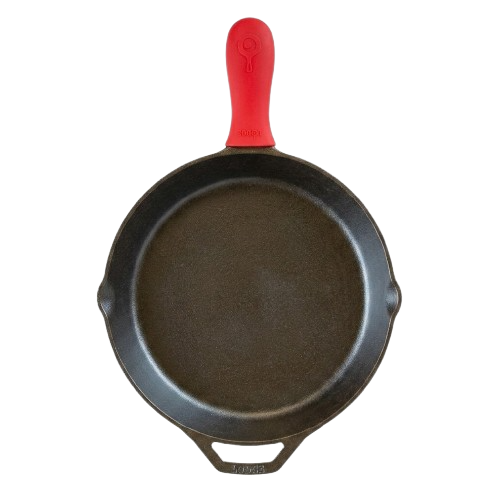
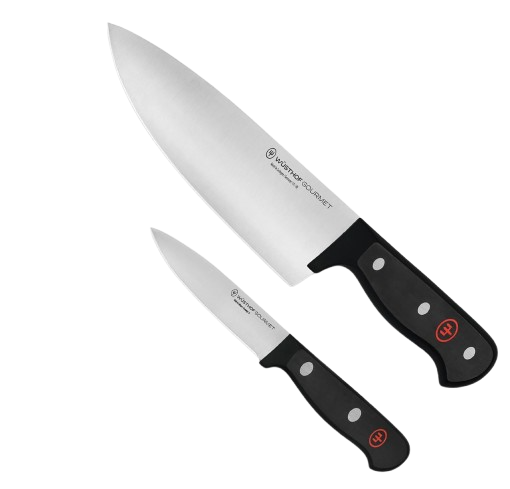
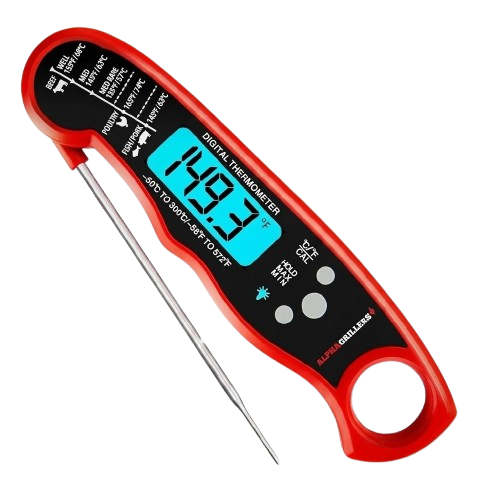

As an Amazon Associate, Salt & Simmer earns from qualifying purchases made through these links, at no extra cost to you.