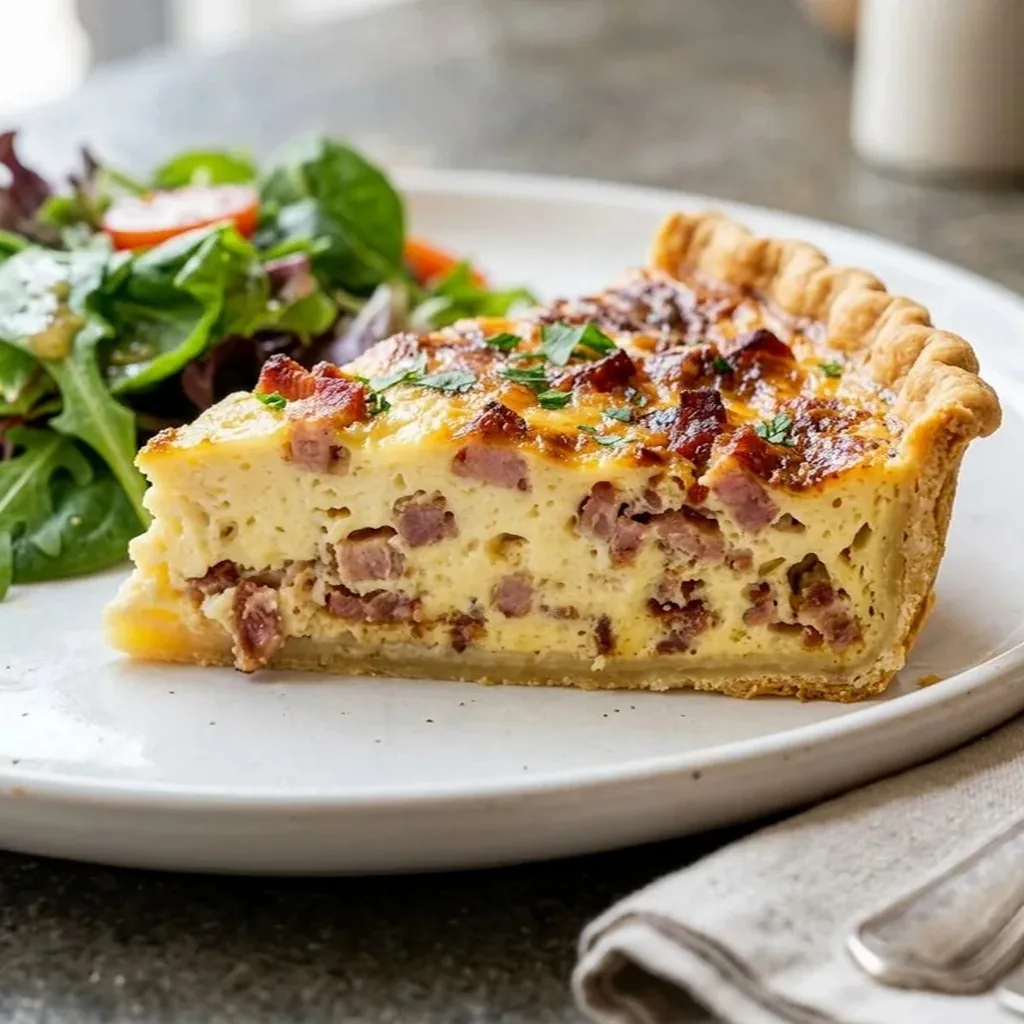
Quiche Lorraine
A classic French custard tart in a blind-baked pastry shell, filled with crisp bacon, sweet onion, Gruyère, and a rich egg and cream custard. Elegant enough for brunch, hearty enough for dinner.
For the Pastry Crust
- 1 cup all-purpose flour
- ½ tablespoon granulated sugar
- ½ teaspoon salt
- 1 stick unsalted butter, cold and cubed
- Cold water, to stream
For the Filling
- 4 strips bacon
- 1 onion, thinly sliced
- 1 cup Gruyère or Swiss cheese, cubed
- ¼ cup grated Parmesan
- 4 eggs, lightly beaten
- 2 cups heavy cream, or 1 cup each milk and cream
- ¼ teaspoon nutmeg
- ½ teaspoon salt
- ¼ teaspoon freshly ground pepper
- Tabasco sauce, to taste
- To make the pastry, pulse the flour, sugar, and salt together in a food processor, then add the cold cubed butter and pulse until the mixture turns crumbly with clumps no larger than peas. Stream in cold water a teaspoon at a time until the dough just comes together, then gather it into a disc, wrap tightly, and chill for at least 30 minutes — cold, well-rested dough is what makes a crust easy to roll and reliably flaky once baked.
- Heat the oven to 400°F. Roll the chilled dough out and fit it into a 9-inch pie plate, building up a rim around the edge and fluting it decoratively — this raised border matters more than it might seem, since it's what will contain the generous amount of custard this quiche calls for without it overflowing in the oven.
- Line the bottom of the pastry with a round of parchment paper and fill it with dried beans or peas to weigh it down. Bake for 10 minutes — this partial blind bake sets the crust's structure before the wet filling goes in, which is what keeps the bottom from turning soggy.
- Reduce the oven temperature to 375°F. Carefully remove and discard the parchment and beans, then set the partly baked pastry shell aside while you prepare the filling.
- Cook the bacon in a skillet until crisp, then remove it to drain. Pour off all but about a tablespoon of the rendered fat left in the pan, and cook the sliced onion in that remaining fat until it turns soft and translucent — letting the onion cook in the bacon fat rather than fresh oil builds another layer of smoky flavor into the filling.
- In a separate bowl, whisk together the eggs, cream, nutmeg, salt, pepper, and a few dashes of Tabasco sauce until well combined. Crumble the cooked bacon and scatter it, along with the cooked onion and both cheeses, evenly over the bottom of the partly baked pastry shell.
- Strain the egg and cream mixture over the bacon, onion, and cheese in the pastry shell — straining catches any small bits of cooked egg white and ensures the finished custard is perfectly smooth. Carefully slide the filled pie onto a baking sheet to make it easier to transfer in and out of the oven.
- Bake until a knife inserted about an inch from the pastry edge comes out clean, roughly 50 minutes — the very center may still have a slight jiggle, which is fine, since it will continue to set as it cools. Transfer the quiche to a wire rack and let it stand for 5 to 10 minutes before slicing and serving.
Chef's Note: Quiche Lorraine is the original quiche, and true to its Lorraine roots, it contains no vegetables beyond the onion — just eggs, cream, bacon, and cheese, allowed to speak for themselves. The blind-bake-then-fill method used here is the single most important technique in the recipe, since a soggy bottom crust is the most common way a quiche goes wrong, and that initial bake with the pastry weighted down is what prevents it.
Straining the custard mixture before pouring it over the filling is a small step that makes a real difference in the final texture, removing any stray bits of egg white that would otherwise show up as little white flecks once baked. Quiche Lorraine is excellent served warm, but it also holds up beautifully at room temperature, which makes it a smart make-ahead option for brunch — bake it the morning of, or even the night before, and simply reheat gently or serve it cool.
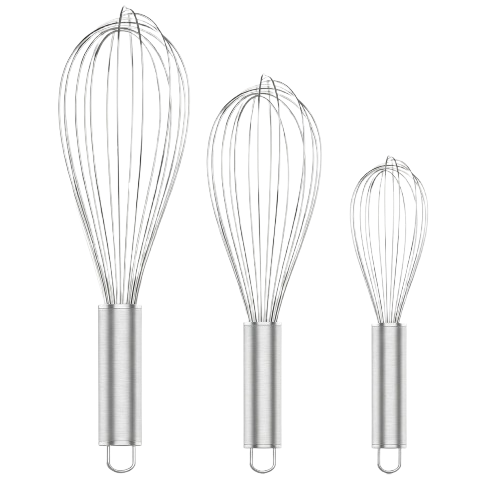
A few tools that make this recipe easier to get right.
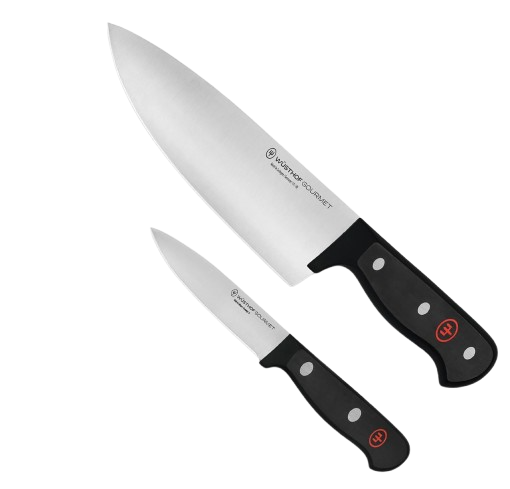
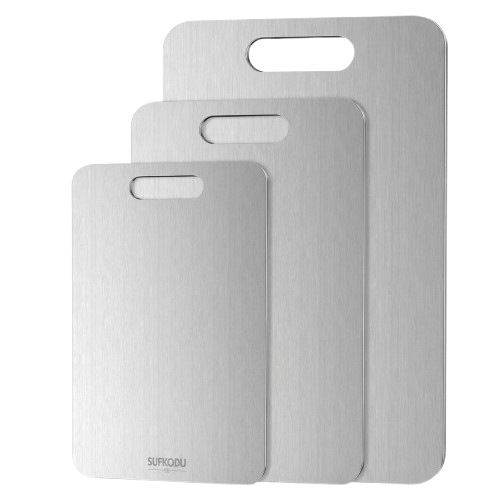
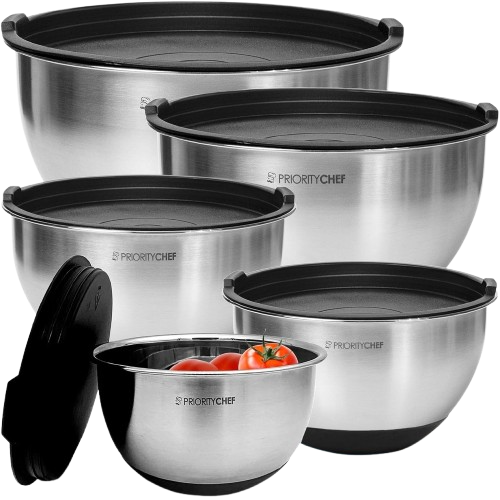
As an Amazon Associate, Salt & Simmer earns from qualifying purchases made through these links, at no extra cost to you.