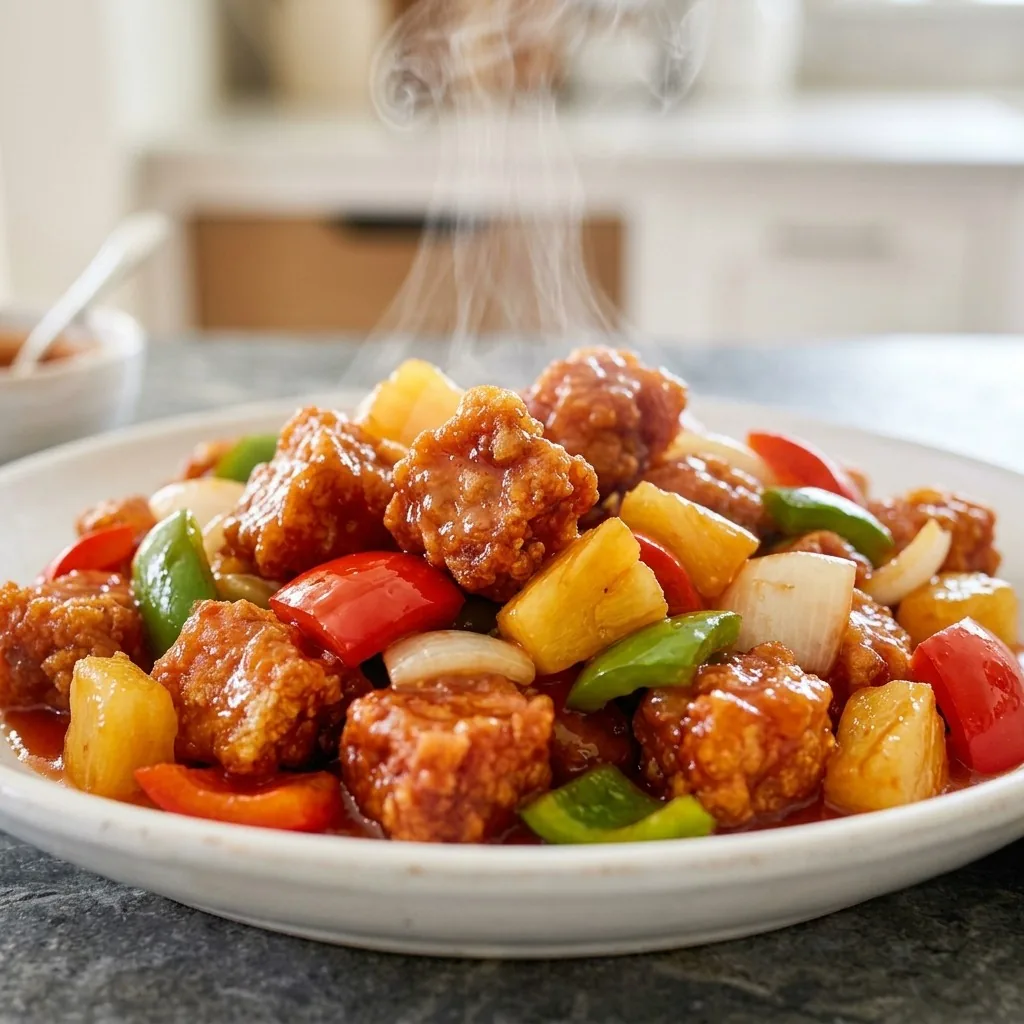
Sweet and Sour Pork
Tenderized pork, double-dredged and double-fried for maximum crispiness, tossed in a tangy homemade sweet and sour sauce with peppers, onion, and pineapple. Marinate the night before for the best results.
- 400 g / 14 oz pork scotch roast (aka pork neck, collar butt) or shoulder / butt, cut into 2cm / 4/5" cubes
- 1/2 onion, finely grated
- 1 tsp garlic, finely grated
- 1 tsp ginger, finely grated
- 3/8 tsp baking soda (bi-carb)
- 2 tsp cornflour/cornstarch
- 2 tbsp light soy sauce, or all purpose
- 5 tbsp cornflour/cornstarch, for mixing in
- 1/2 cup cornflour/cornstarch, for coating
- 2-3 cups vegetable or canola oil
- 1/3 cup white sugar
- 1/3 cup apple cider vinegar (or 1/4 cup normal white vinegar)
- 3 tbsp pineapple juice (from a 227g/8oz can pineapple pieces in juice)
- 3 tbsp ketchup (or Aussie tomato sauce)
- 1/2 tsp Worcestershire sauce
- 1 tbsp light soy sauce
- 1 tsp oyster sauce
- 4 tsp cornflour/cornstarch
- 1/2 cup water
- 1 tbsp oil
- 1 garlic clove, finely chopped
- 2 tsp ginger, finely chopped
- 1 onion (medium), cut into 2.5cm / 1" cubes
- 1/2 red capsicum/bell pepper (large), cut into 2.5cm / 1" cubes
- 1/2 green capsicum/bell pepper (large), cut into 2.5cm / 1" cubes
- 1 cup pineapple pieces (from the can of pineapple used above)
- Combine the pork cubes with the grated onion, garlic, ginger, baking soda, cornflour, and soy sauce, mixing well so every piece is coated. Cover and marinate in the fridge for 18 to 24 hours — this isn't just for flavor, the baking soda and cornflour work together to tenderize an economical cut of pork so it eats like something far pricier.
- When you're ready to cook, whisk all the sauce ingredients except the water together in a jug or bowl, then stir in the water until smooth. Set it aside, and have your stir-fry vegetables and pineapple prepped and within reach, since once the pork is fried, everything moves fast.
- Mix 5 tablespoons of cornflour into the marinated pork and let it sit for 5 minutes. The pork will look dry and white at first, but as it sits, the moisture in the meat will dampen the cornflour and turn it sticky — that stickiness is what lets the next coating actually cling.
- Spread the remaining 1/2 cup of cornflour in a shallow bowl and coat each piece of pork, shaking off the excess before piling the pieces onto a plate. Keep any leftover cornflour nearby in case a few pieces need a extra dusting right before frying — you want the pork mostly white with coating before it hits the oil.
- Pour oil into a large saucepan or pot to about an inch deep and heat it to 350°F. Fry the pork in batches without crowding the pot, cooking each batch for about 3 minutes until golden — this first fry is mainly about cooking the pork through, not about getting it crispy yet. Drain the pieces on a wire rack rather than paper towels, since paper towels trap steam and soften the coating.
- Raise the oil temperature to about 390°F for the second fry. Starting with the pork that's cooled the most, fry it in two batches — you can crowd the pot a bit more this time — for about 90 seconds each, until deep golden brown and properly crispy. This second, hotter fry is the trick that keeps the coating crisp for longer once it meets the sauce, so don't skip it if you can help it.
- Heat the stir-fry oil in a very large skillet over high heat. Add the chopped garlic, ginger, and onion and stir-fry for about 90 seconds, then add the bell peppers and stir-fry for another 2 minutes until just starting to soften.
- Pour in the sauce and pineapple pieces and bring everything to a rapid simmer. Let it cook for about 2 minutes until it thickens noticeably — you'll know it's ready when dragging a spoon across the base of the pan briefly leaves a visible path before the sauce flows back together.
- Add the crispy pork and toss quickly to coat in the sauce — aim for about 10 seconds and no longer. The faster you move here, the longer the pork holds onto its crunch once it's plated.
- Transfer to a serving plate and serve immediately. The pork will stay properly crispy for around 5 minutes before it starts to soften slightly, which is completely normal — even good Chinese restaurants can't avoid this once the sauce and pork meet.
Chef's Note: The double-dredge and double-fry combination here is what separates homemade sweet and sour pork from the version you'd get at a mediocre takeaway — cornflour instead of regular flour gives a lighter, crisper shell, and frying twice at two different temperatures cooks the pork through gently first before blasting the exterior properly crispy at higher heat. It's more hands-on than most weeknight dinners, but each step is doing real work, not just adding fuss for its own sake.
Economical cuts like pork scotch (neck/collar) or shoulder work beautifully here because the baking soda marinade tenderizes them enough to eat like a pricier cut — just don't skip the marinating time if you're using a tougher cut. If you'd rather skip deep frying altogether, pan-searing the coated pork in a shallow pool of oil until golden, then finishing it in a hot oven, gets you most of the way to crispy with a lot less oil and cleanup.
A few tools that make this recipe easier to get right.
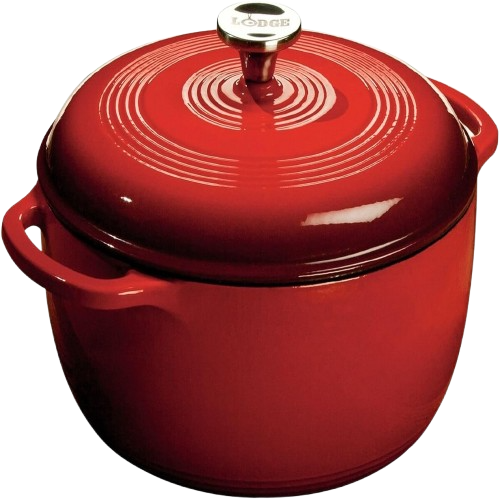


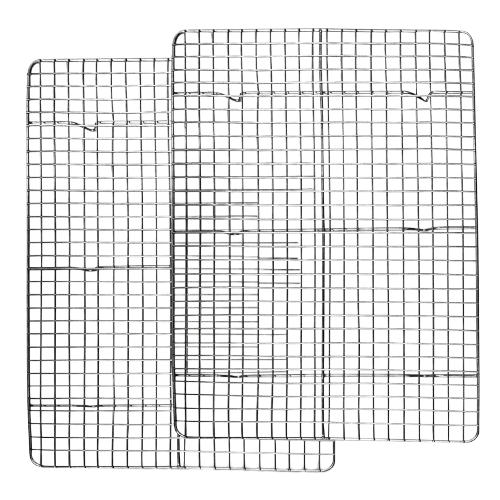
As an Amazon Associate, Salt & Simmer earns from qualifying purchases made through these links, at no extra cost to you.